

Sustainable Power
Decentralizing makes power, in all its various forms, more sustainable.

Recently, I acquired a small, solar-powered light to illuminate our family’s American flag. I was motivated to get it to avoid having to raise and lower our flag every day. The acquisition also ensures I follow the law regarding the display of an American flag because the light turns on automatically at dusk. By Congress’s act, yesterday—Martin Luther King Jr. Day—is listed among days especially for flag display, and I proudly displayed ours
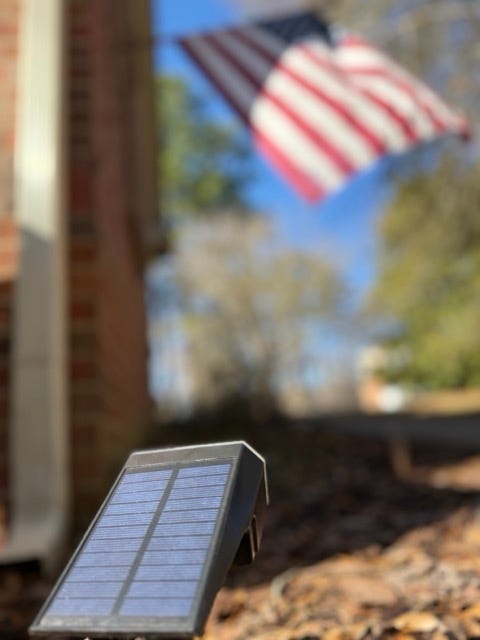
Like many Americans, I have many reasons for displaying our nation’s flag. One reason is to remind me of the question that ends the first verse of our national anthem:
“O say does that star-spangled banner yet wave
O’er the land of the free and the home of the brave?”
These days, I consider that question far more often given the actions of our nation’s 47th President and his enablers, which, to my way of thinking, include columnists who “shrug” even as they issue dire warnings against his agenda.
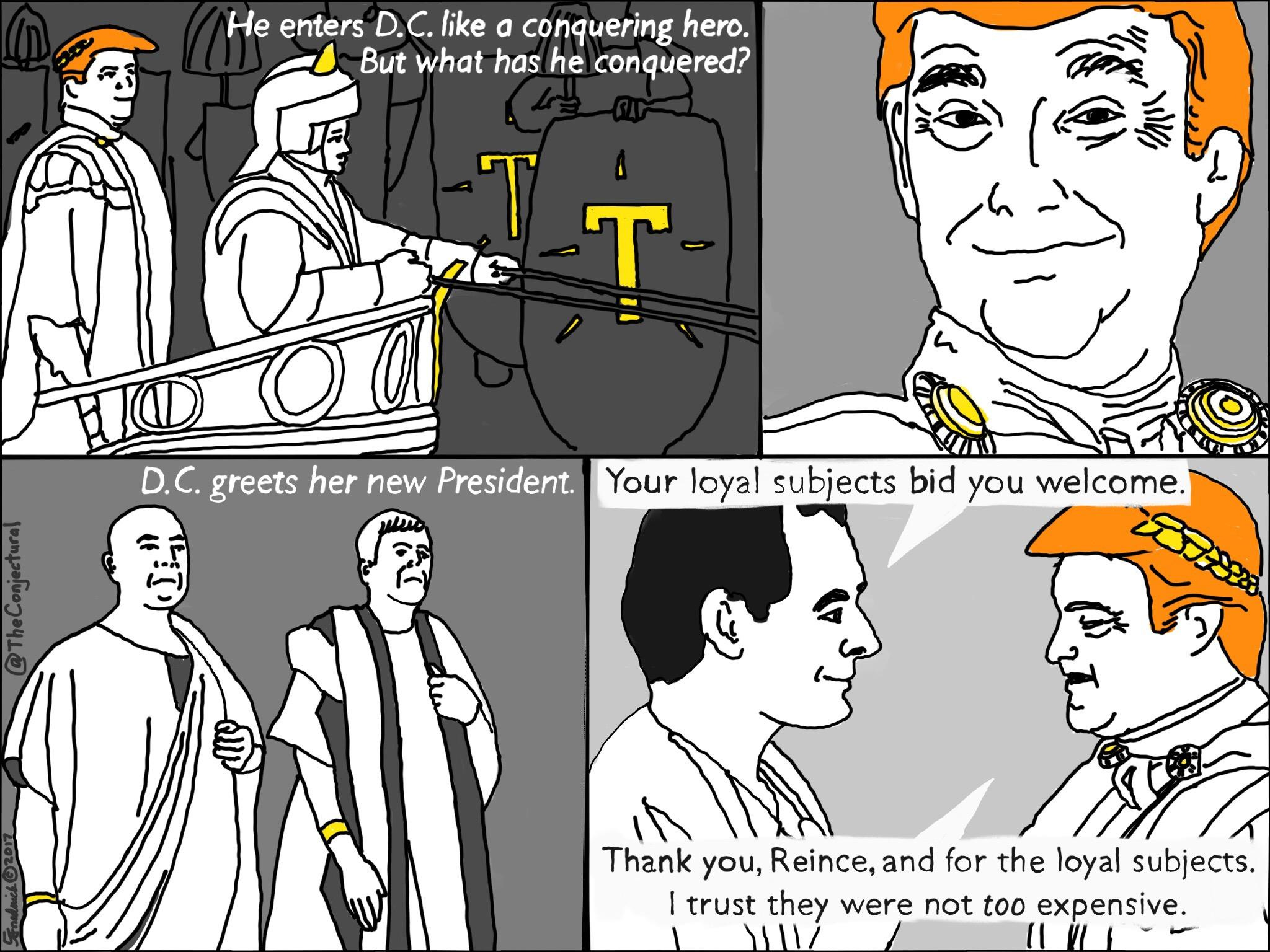
So, when I see the video of the brave, free speech Governor Walz gave in response to the ongoing federal presence in Minnesota, “yes” is my answer to that land-of-the-free-and-home-of-the-brave question.
But when I read comments by anonymous posters to that video suggesting Governor Walz’s speech is sedition, I think “maybe not,” or “not much longer.”
Then I remember that such anonymous comments (including edited versions, “likes,” and replies) can be easily generated using modern technology. So I think “yes” again. Indeed, most anyone can become a troll, and a technology-enabled troll—including foreign adversaries—can be quite influential.
Technologies of all kinds enable various forms of power, including all the various systems that bring these words to you. But technology alone, or the science behind it, is no solution to any problem without policies to match. That’s because science and society are a co-production, as scholar Sheila Jasanoff put it, each producing and being produced by the other. Indeed, as the people in Iran are currently experiencing, there are multiple ways to shut down even distributed technological systems—such as the Internet—to keep people from having the power of information on which to act. Technology alone is insufficient.
The more we distribute power—power of all kinds, whether the physical power of energy, the power of information and knowledge, the political power of decision-making—the more sustainable it is.
Autocrats centralize power, but such political systems only last as long as people submit to the autocrat’s power. That submission can be insidious, such as looking at the legal reality here in America and saying “things aren’t that bad” or “my life is pretty much what it was.” But so often that submission is blatant and even performed.
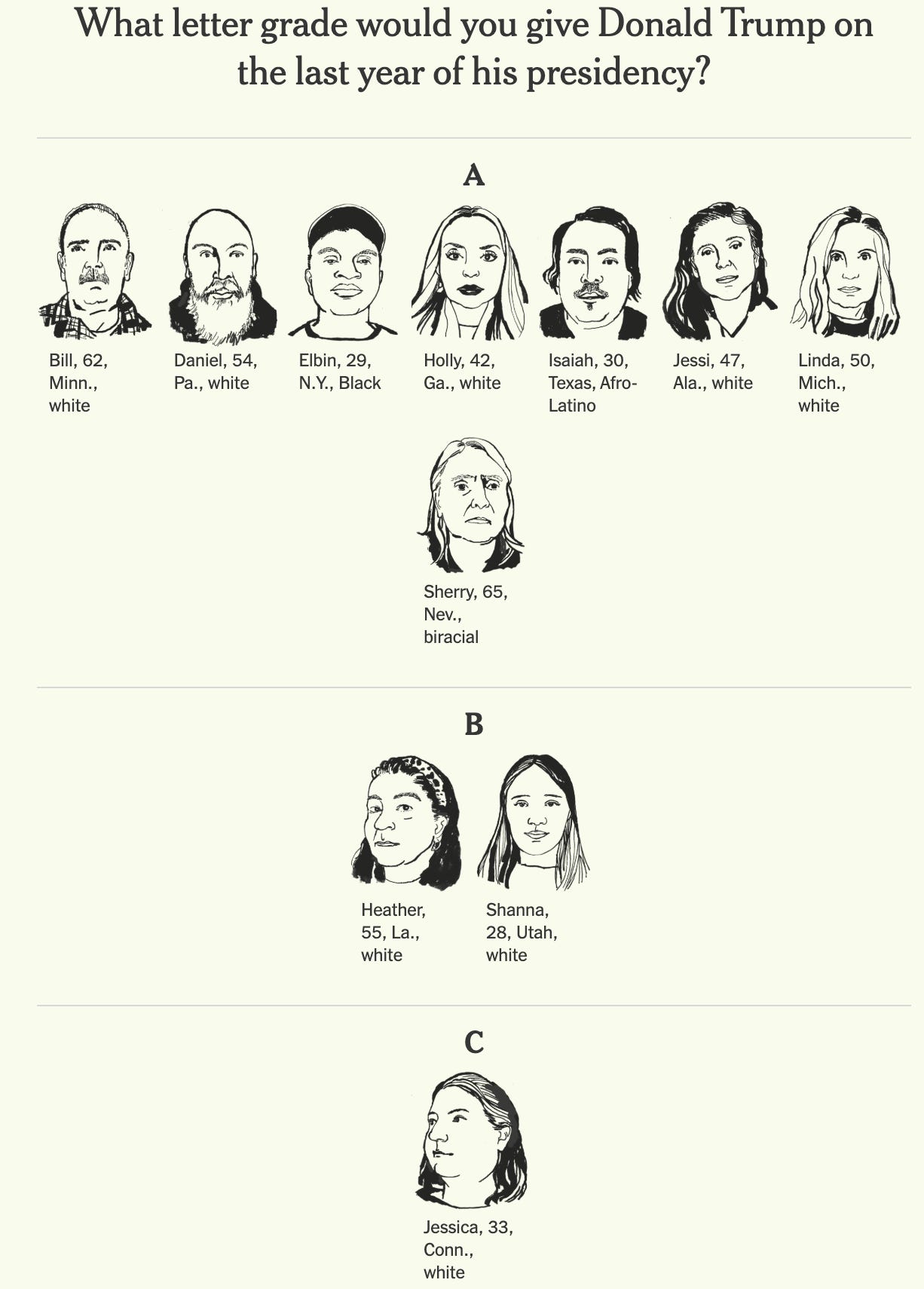
When energy is centralized, some percentage of it is invariably lost. With electricity, for example, about 5% is lost due to transmission and distribution, no matter how that electricity is centrally produced. For fossil fuels, because of the many processes involved—both distributed and centralized processes in locating them, digging them up, processing them, and distributing them to be burned—the majority of its energy is lost. It doesn’t matter if finding the fossil fuels is easy, or whether they’re burned by an individual’s combustion engine (say, a car) or to power turbines to create electricity (say for xAI). The majority of a fossil fuel’s energy is lost as wasted heat.
I must say it is quite challenging—as I have tried to do—to use existing, available datasets to compare the environmental cost of power supplied by a centralized electrical grid to the distributed power of my little solar-powered light, its accompany battery, and the eventual cost of its disposal. But given utility-scale data, it seems a good estimate to say that it probably takes only a few years before the environmental cost of this little light of mine—even though it is imported from China—becomes less than a light powered via the local fossil-fuel burning electricity plant. In part, that’s also because there’s plenty of sunshine here.
Of course, less consumption generally — or less conscientiousness on my part to have both an all-weather flag and to follow the law in displaying it — would be even more sustainable.
But another reason I display the flag is to honor the military veterans in my family, and the flag most reminds me of my grandfathers, who both served during what I hope remains the world’s last world war. That’s why the United Nations—based on distributed power or “sovereign equality of all its Members”—was chartered: “to maintain international peace and security” and so “save succeeding generations from the scourge of war.”
(And if you have input for the U.N. about the “persisting challenges and barriers for implementing the Sustainable Development Goals,” fill out this survey by 30 January 2026.)
Indeed, distributing political power is more sustainable for decision-making generally. Where I live, the billion-dollar developer, D.R. Horton, appears to have violated the Development Agreement with our town by building a house where the company was supposed have a retention pond. The Development Agreement itself was lopsided and so perhaps will soon be under formal dispute given the recent inauguration of newly elected officials. But, even so, according to the Development Agreement as is, changes such as swapping a house for a retention pond appear to require approval—in advance—by our town’s elected officials. Over the weekend, I saw the house going up where a retention pond was to be built and alerted them to the swap. Tonight our community will see and hear how our elected officials respond. Can you imagine how long it would take to resolve such an issue if all such decisions—nationwide—had to be decided by the same group or person?
As regards the power of information and knowledge, this is perhaps the most challenging power to decentralize, especially in our attention economy. We teachers know this very well. I will say, though, that I have found it far easier to attract and retain the attention of my students when teaching journalism—which I do now—than when teaching mathematics, which I did before I became a science journalist. Even the famous Luca Pacioli (who greatly influenced and collaborated with Leonardo da Vinci, both “Renaissance” men) couldn’t keep the attention of Erasmus of Rotterdam—it is suggested—in giving a public lecture that involved mathematics: Erasmus scornfully complained that mathematicians created artificial problems only to impress the gullible by solving them and enjoyed baffling their audiences with geometrical shapes ‘piled on top of each other and intertwined like a maze’ with algebraic notation ‘deployed hither and thither in order to throw dust in the eyes.’
So, Dear Reader, the most important information and knowledge I hope to distribute in this post — using two strategies here simultaneously to gain/retain your attention by both calling you out as “Reader” and using repetition — regards the insidiousness of saying to yourself “things aren’t that bad” or “my life is pretty much what it was.”
In particular, I hope to encourage you to consider the writings of Ernst Fraenkel, which the columnist’s article (also linked just above) above refers to: “An Old Theory Helps Explain What Happened to Renee Good” (David French, The New York Times, 18 January 2026… it is a “gift link”).
But the “Old Theory”—from Ernst Fraenkel—isn’t that old.
I read Fraenkel in college because my History of Western Civilization professor, Karl Joachim Weintraub, refused to teach the historical period he lived through. Instead, our professor invited us to his home and, over calming tea, told stories of how he hid behind a knee wall to avoid the Nazis for being, as our professor put it, “as Jewish as Hitler.” When the Nazis were in the process of discovering his hiding place, he climbed onto the roof and dangled from the gutter. He would have been discovered by other Nazis on the ground if they had only looked up.
Fraenkel worked as Nazi-era Jewish labor lawyer, escaping Germany to the United States in 1938 and publishing the English version of “The Dual State: A Contribution to the Theory of Dictatorship” in 1941. As The University of Chicago law professor Aziz Huq wrote in The Atlantic last May (also a gift link, this link courtesy of NYT’s David French), America is watching the rise of the “dual state.” As French summarized it:
Fraenkel had observed the rise of Nazi rule as a working lawyer and committed social democrat and noted that ordinary Germans enjoyed the benefit of what Huq describes as a “capitalist economy governed by stable laws” even as other parts of the German system changed into an engine of genocide and war.
The two components of the dual state are the normative state — the seemingly normal world that you and I inhabit, where, as Huq writes, the “ordinary legal system of rules, procedures and precedents” applies — and the prerogative state, which is marked (in Fraenkel’s words) by “unlimited arbitrariness and violence unchecked by any legal guarantees.”
“The key here,” Huq writes, “is that this prerogative state does not immediately and completely overrun the normative state. Rather, Fraenkel argued, dictatorships create a lawless zone that runs alongside the normative state.”
It’s the continued existence of the normative state that lulls a population to sleep. It makes you discount the warnings of others. “Surely,” you say to yourself, “things aren’t that bad. My life is pretty much what it was.”
As Huq, though, concludes in his piece in The Atlantic:
Most people can ignore the construction of the prerogative state simply because it does not touch their lives. They can turn away while dissidents and scapegoats lose their political liberty. But once the prerogative state is built, as Fraenkel’s writing and experience suggest, it can swallow anyone.
It didn’t swallow Renee Good. It killed her. There’s been no federal investigation of her death or the federal agent who shot her.
Instead, the federal government is conducting investigations into Good’s partner and have today issued subpoenas to multiple Democratic officials in Minnesota, including Governor Tim Walz, Attorney General Keith Ellison, and Minneapolis Mayor Jacob Frey for allegedly conspiring to impede U.S. Immigrations and Customs Enforcement. Does that sound like a “prerogative” dual state to you? It certainly sounds like “unlimited arbitrariness and violence unchecked by any legal guarantees” to me.
The Republican party has been conquered by Trump, but can still act to stop him… if only they can stop enabling him, first. Some in the Republican party have said if Trump takes Greenland by force, that would prompt them—finally—to act. By then, though, America would already be involved in an undeclared-by-Congress war. That’s a failure that is hard to recover from.
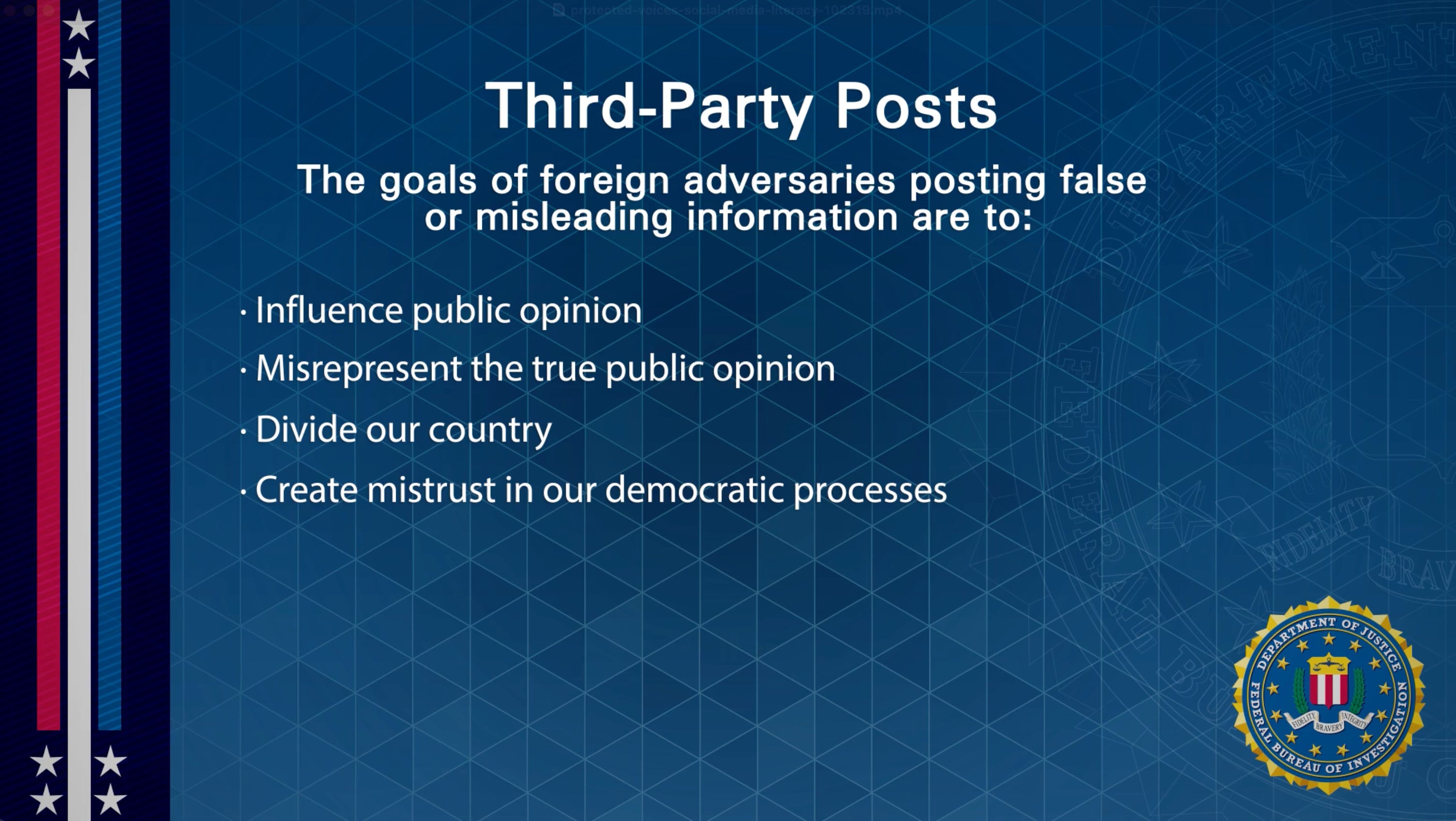
Today, 20 January 2026 — one year since his inauguration — President Trump has been trolling European leaders as weak, including with posts to social media about his ongoing interest in making Greenland a U.S. territory. In doing so, he’s enacting the very same social-media goals that the F.B.I. (under Christopher Wray) warned us about from foreign adversaries:
influence public opinion
misrepresent the true public opinion
divide our country
create mistrust in our democratic process.
Trump’s power—becoming ever more centralized—is unsustainable.
As the “shrug”ging columnist put it—or perhaps his editor—in the headline of his column, it’s been “One Year of Trump. The Time to Act Is Now, While We Still Can” (gift link, M. Gessen, 18 January 2025, The New York Times).
That’s not just a message to Republican members of Congress. The time to act — or act again, repeatedly contacting your members of Congress — is now, “while we still can.”